
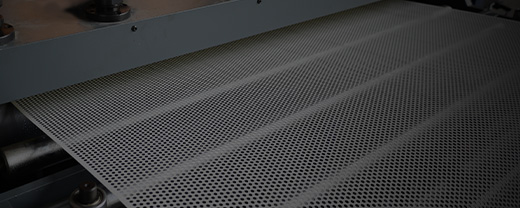

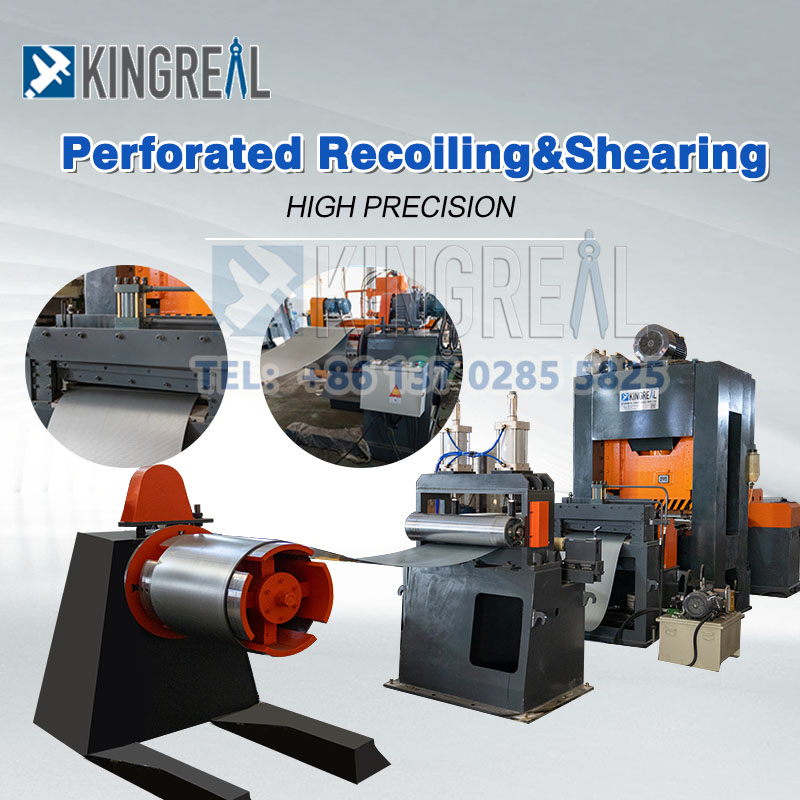
In the global metal processing industry, perforated sheets and coils are used across a wide range of applications, including architectural decoration, filtration systems, acoustic insulation, and industrial protection. A prime example of this is an advanced steel perforated machine customized by KINGREAL CEILING MACHINERY for a client in Morocco.
In traditional perforation processes, the finished product is typically handled in one of two ways: it is either cut into sheets of specific dimensions using a cutting station or rewound into coils using a recoiler. Usually, these two processes are carried out on separate production lines. However, the Moroccan client faced diverse market demands, requiring the supply of both high-precision perforated sheets and long-length perforated coils.
To maximize steel perforated machine utilization while minimizing the client’s facility footprint and capital investment, the KINGREAL CEILING MACHINERY design team integrated both perforation-and-coiling and perforation-and-shearing processes into a single perforated metal machine. This 2-in-1 design enables the steel perforated machine to deliver double the output value within the same floor space.
Core Design Logic of Customized Steel Perforated Machine
The primary challenge in developing this perforated metal machine lay in ensuring that two distinct downstream processes could operate smoothly on a single production line.
1. Integration and Layout of the Mechanical Structure
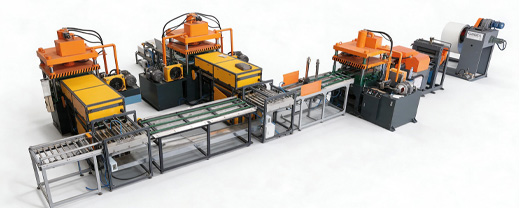
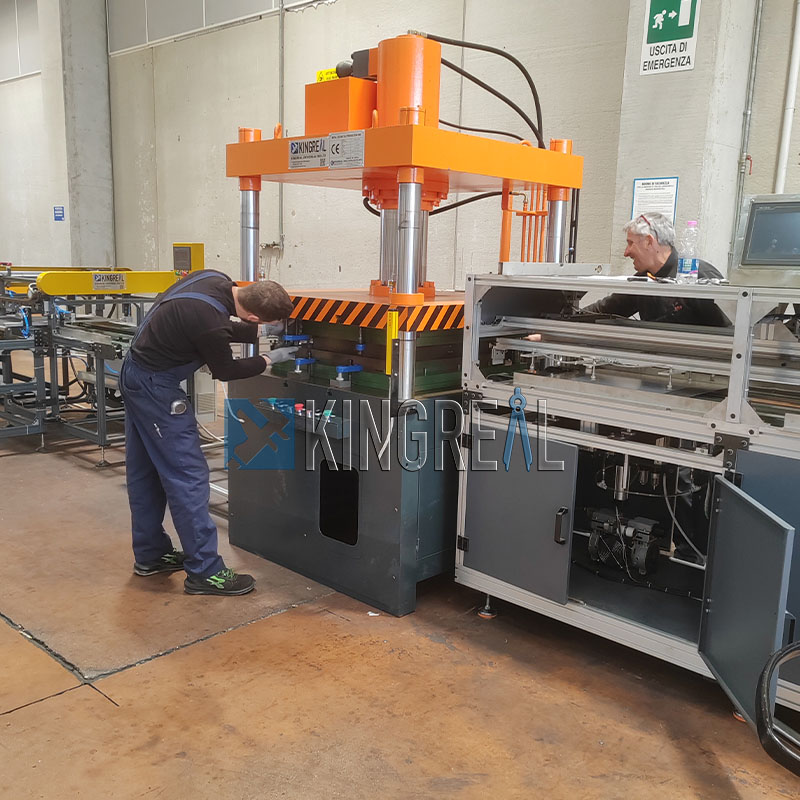
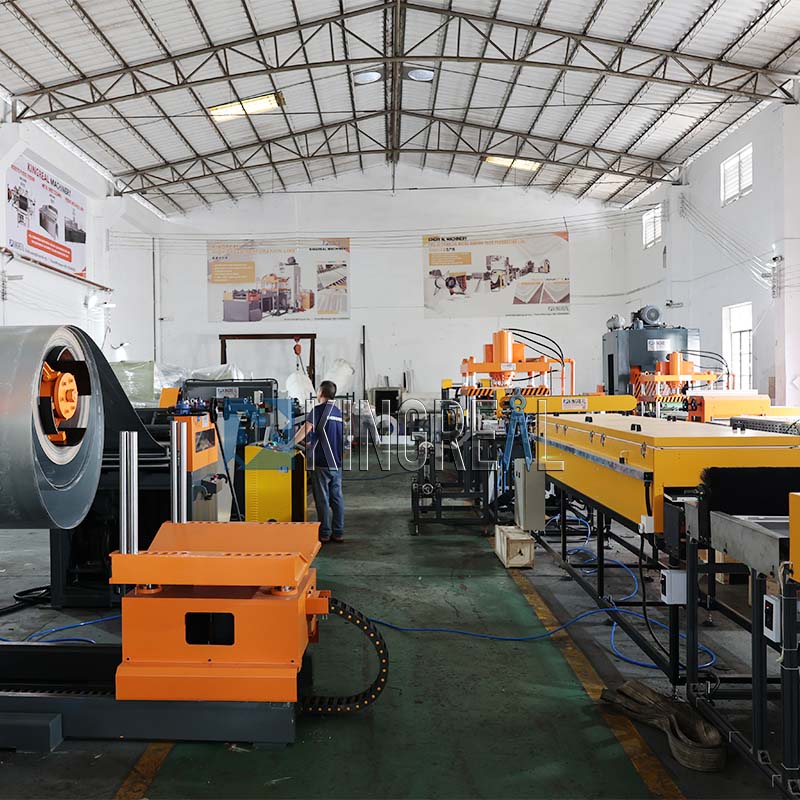
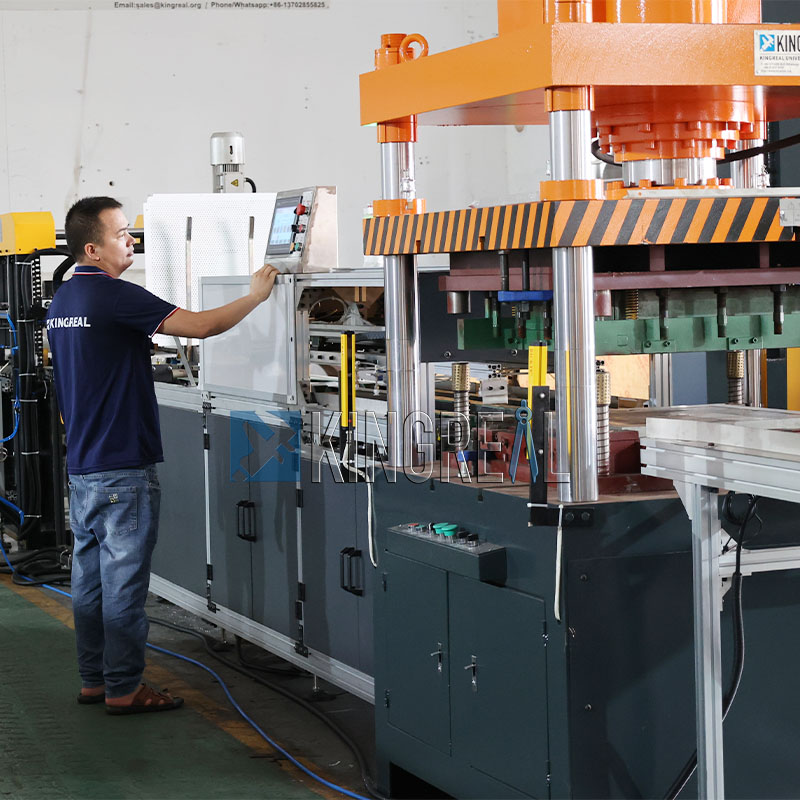
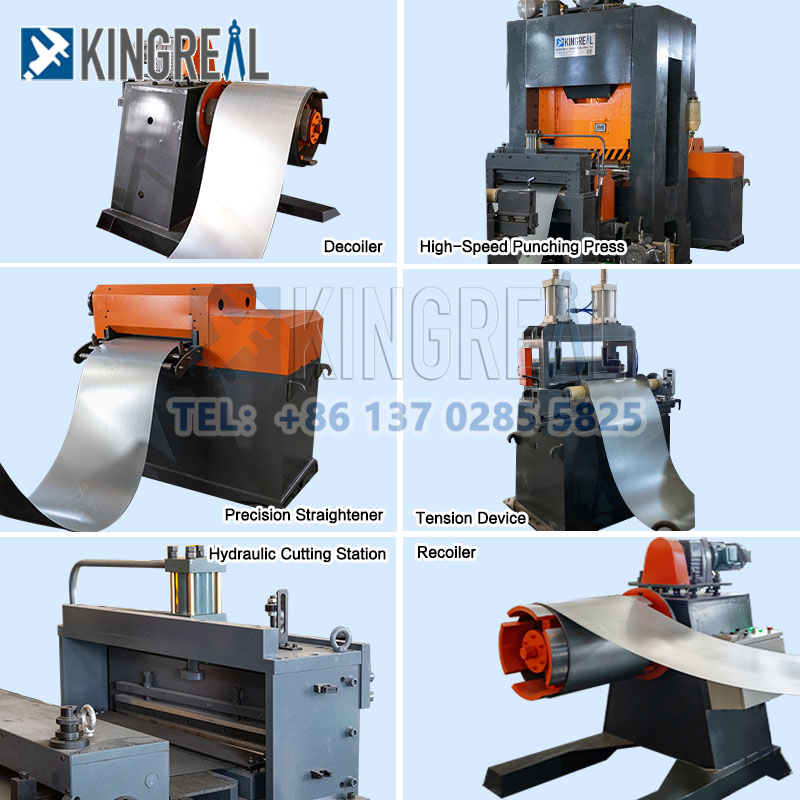
During the design phase, KINGREAL CEILING MACHINERY carefully planned the overall layout of the steel perforated machine. The front end of the production line features a hydraulic decoiler and a precision leveler. The central section houses the core perforation station, where a servo feeder ensures the precise movement of the material through the perforated metal machine. The key innovation lies in the downstream section: KINGREAL CEILING MACHINERY equipped the steel perforated machine with both a hydraulic cutting station and a hydraulic recoiler.
In terms of mechanical layout, the cutting station is positioned immediately after the punching machine, while the recoiler is located at the very end of the production line.
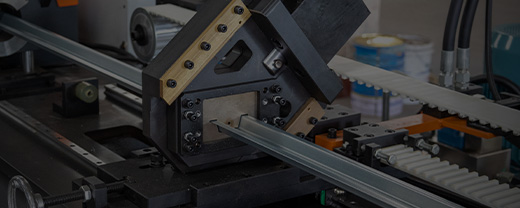
To ensure that material can pass smoothly through the cutting station and reach the recoiler without being cut, KINGREAL CEILING MACHINERY has optimized the clearance of the shearing die and the design of the material-passing table.
2. Implementation of the 2-in-1 Functionality
When operating this perforated metal machine, the client in Morocco does not need to physically remove any heavy components. Switching between functions is handled entirely through the logic configuration of the PLC control system.
-Perforating and Recoiling Mode:
When the client needs to produce perforated coils, the operator selects Recoiling Mode on the PLC control panel. The recoiler activates and synchronizes its speed with the upstream perforation process.
During this operation, the hydraulic cutting station remains inactive; the upper shear blade stays in its highest position, allowing the material to pass through the shearing zone as a continuous strip without being cut. The recoiler’s expanding mandrel grips the leading edge of the material, initiating a tension-controlled coiling process.
-Perforating and Shearing Mode:
When the requirement shifts to producing perforated sheets, the operator selects Shearing Mode on the control panel. In this mode, the recoiler at the end of the line remains stationary. After the material is perforated, it is precisely positioned by the feeder and then cut to a pre-set length by the shearing station.
It should be noted that the recoiler and the shearing station cannot be operated simultaneously. This logical safeguard ensures the safe operation of the steel perforated machine, preventing material stretching or mechanical damage that could otherwise result from accidental operator error.
Technical Specifications and Components of Steel Perforated Machine
To ensure that the perforated sheets and coils produced meet the highest standards of precision, this perforated metal machine incorporates several industrial-grade components:
1. High-Precision Servo Feeding System
The perforation process demands exceptional stepping accuracy; even the slightest deviation can accumulate over long production runs, leading to inconsistent hole spacing.
This steel perforated machine is equipped with a high-performance servo feeder, offering a stepping precision controlled within ±0.15 mm. This ensures consistent results when processing complex perforation patterns.
2. Punching Dies and Press Body
Tailored to the steel specifications provided by the Moroccan client, the punching dies are crafted from high-hardness alloy steel.
The modular design of the dies allows for future adjustments, enabling the client to switch between different hole diameters or shapes.
As a heavy-duty perforated metal machine, its base is constructed from thickened, welded steel plates that have undergone an annealing process to eliminate internal stress, ensuring the steel perforated machine’s stability during high-frequency punching operations.
3. Leveling Unit
After continuous punching, steel strips often experience warping or deformation due to the release of internal stress—an undesirable outcome for both perforated sheets and recoiled material.
To address this, we have integrated a multi-roller leveling unit before the cutting and recoiling stages, ensuring that the final product meets international industrial flatness standards.
Why Choose Steel Perforated Machines with Integrated Cutting & Recoiling Design?
For the Moroccan client, this customized perforated metal machine offers significant commercial advantages:
-Maximizing Equipment Utility: A single steel perforated machine handles tasks that would otherwise require two separate units, substantially improving the return on investment.
Optimizing Floor Space: The production area in the Moroccan facility can be utilized more efficiently, eliminating the need for additional aisles or storage zones required for two separate production lines.
Market Agility: The client can switch between production modes in a matter of minutes based on daily order requirements—whether for perforated coils or urgent, perforated sheets.
Precision Finished Products: By processing both sheets and coils within a single, closed-loop system, the risk of surface scratches—often caused by secondary handling—is minimized.
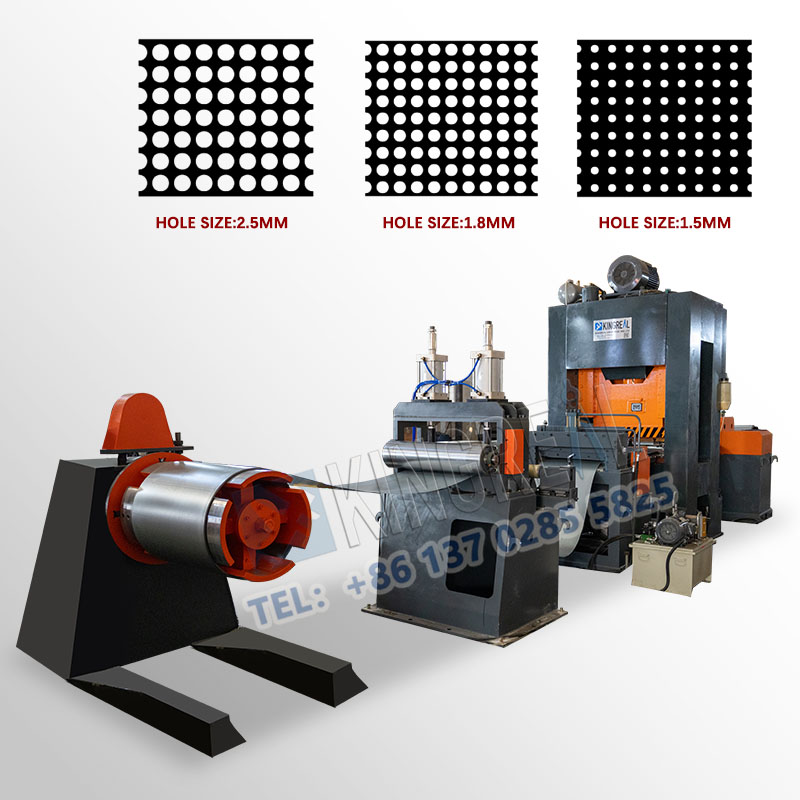
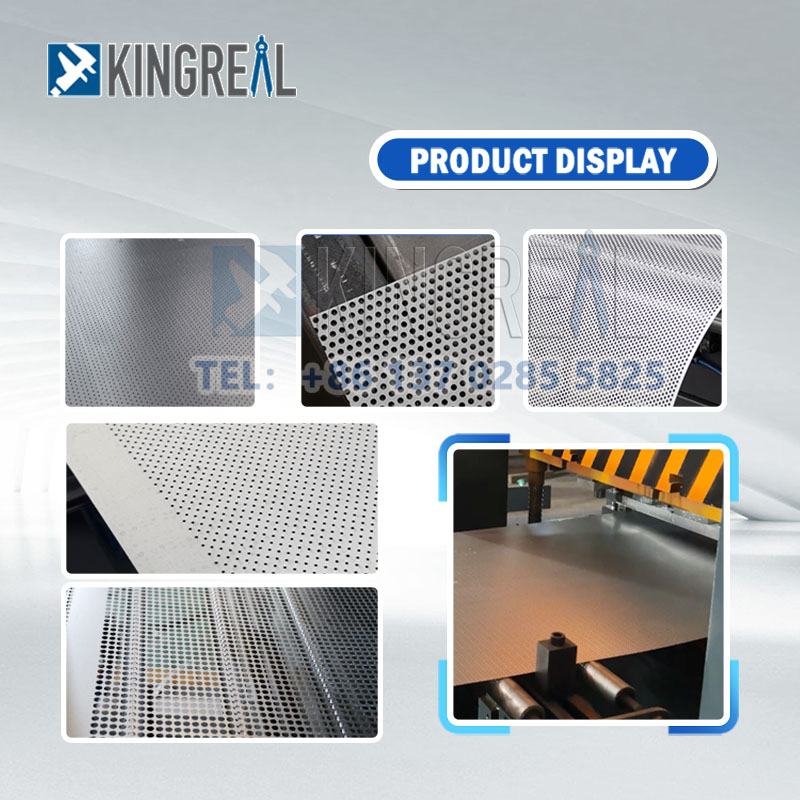
Perforated Metal Machine Quality Control and Acceptance Standards
Before the steel perforated machine leaves the factory, KINGREAL CEILING MACHINERY conducts rigorous Factory Acceptance Testing. For this steel perforated machine, KINGREAL CEILING MACHINERY evaluated its performance in two distinct operating modes:
In the recoiling mode, the perforated metal machine was tested for recoiling uniformity and edge tension control;
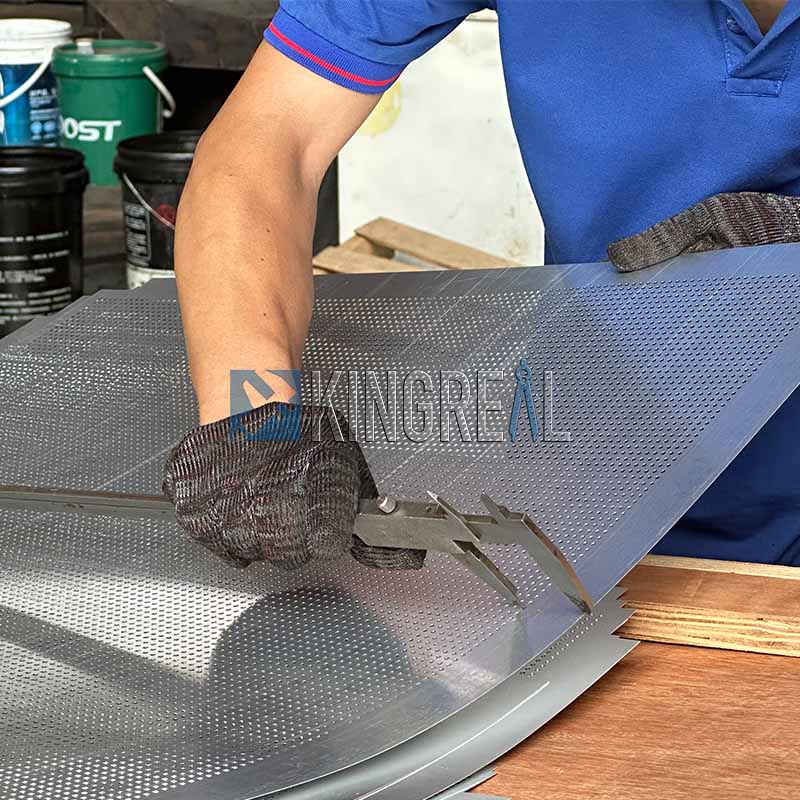
In the cutting mode, it was tested for length precision and the perpendicularity of the cut edges.
The test results confirm that this steel perforated machine exhibits exceptional structural rigidity and processing accuracy when handling steel strips.
Custom-engineered for a client in Morocco, this perforated metal machine features an innovative design that integrates both recoiling and cutting functions.
It precisely addresses the client’s dual requirements for product diversification and high production efficiency.
This project highlights KINGREAL CEILING MACHINERY deep technical expertise in metal forming and stamping, as well as our capability to provide bespoke, non-standard solutions tailored to the specific operational needs of clients worldwide.
If you are seeking an advanced design for a steel perforated machine, or require a solution for complex, integrated processes involving perforation, coiling, and cutting, please contact the KINGREAL CEILING MACHINERY technical team directly.