


In the manufacturing process of grilyato ceilings, the punching stage is a critical step that determines assembly precision and structural stability.
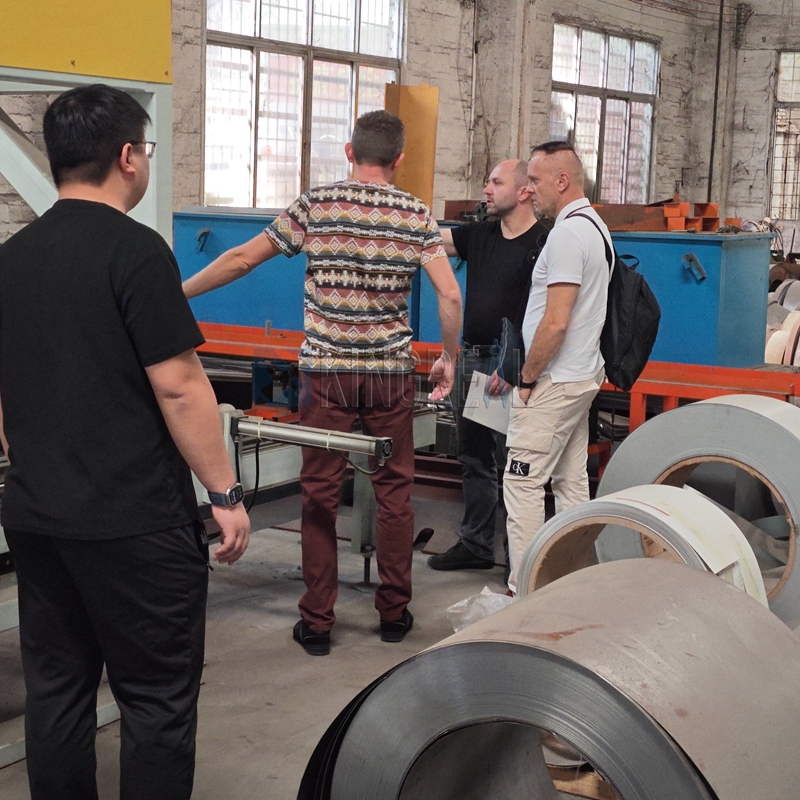
KINGREAL CEILING MACHINERY possesses extensive experience in the design and manufacture of grilyato ceiling machines, having successfully provided customized solutions to clients in Vietnam, Russia, Ukraine, India, Kazakhstan, and beyond.
As the global construction market increasingly demands higher installation efficiency and visual consistency for grilyato ceilings, KINGREAL CEILING MACHINERY has systematically upgraded the press of grilyato ceiling production lines by integrating market trends with extensive customer feedback.
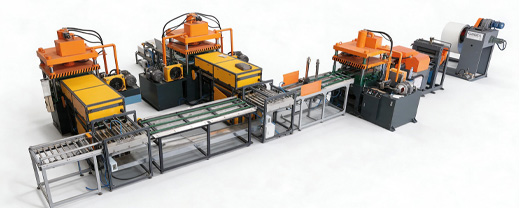
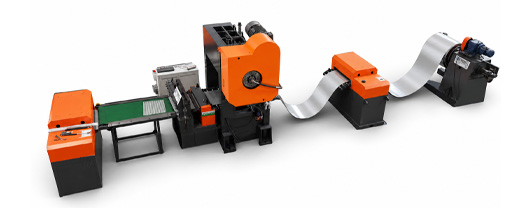
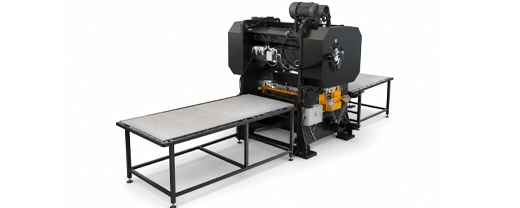
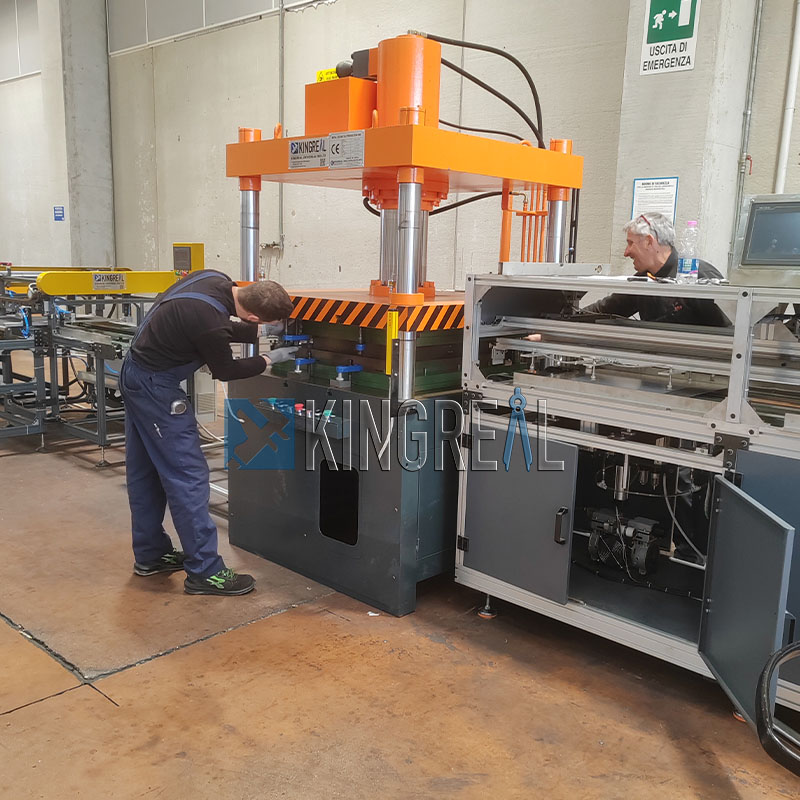
Currently, KINGREAL CEILING MACHINERY offers two primary configurations: a standard grilyato ceiling machine equipped with a 16-ton punching press and a high-end grilyato ceiling production line equipped with a 63-ton punching press.
Addressing the common question regarding the choice between the 16-ton and 63-ton press options, this article provides an in-depth analysis based on technical performance, production logic, and return on investment.
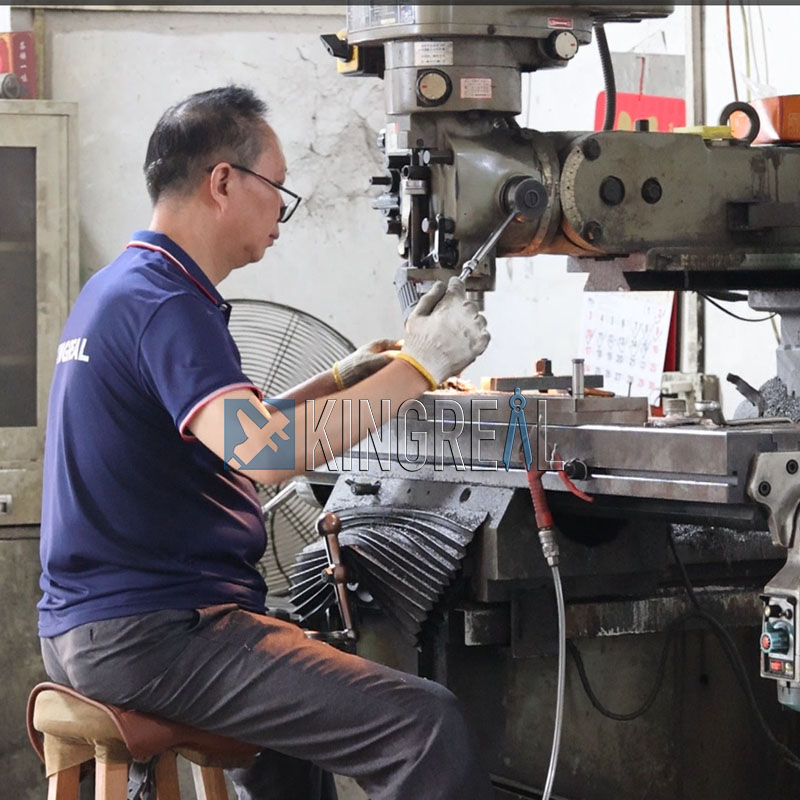
16-ton: | 63-ton: |
Innovation in Punching Design: 16-Ton vs. 63-Ton
During grilyato ceiling production, the primary function of the punching press is to create interlocking notches in the material. The difference between the 16-ton and 63-ton models represents not merely a numerical increase, but a fundamental shift in production logic:
1. Punching Mode: Single-Point Stepping vs. Synchronous Row Punching
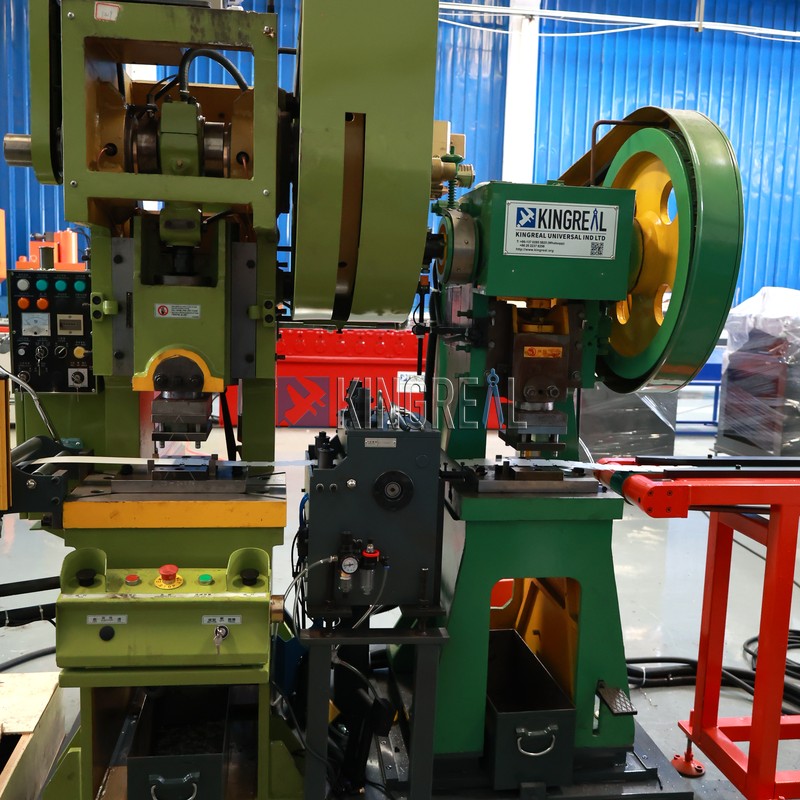
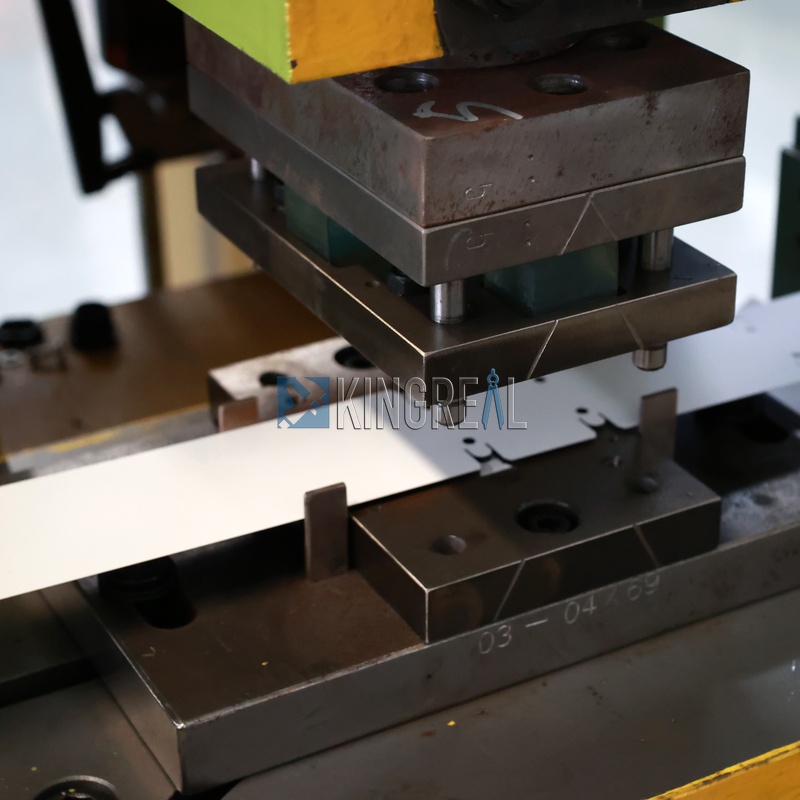
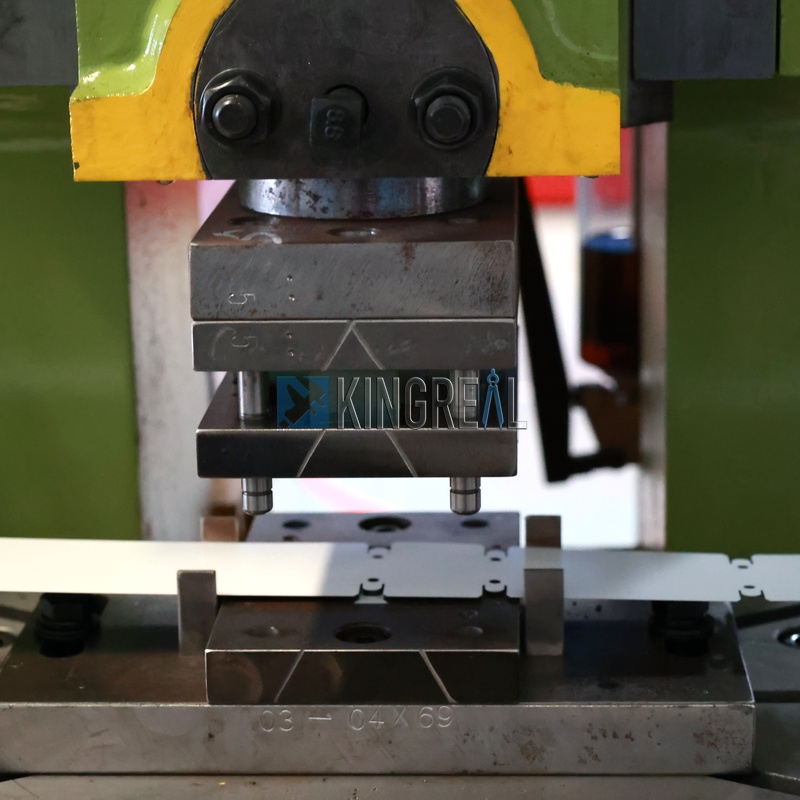
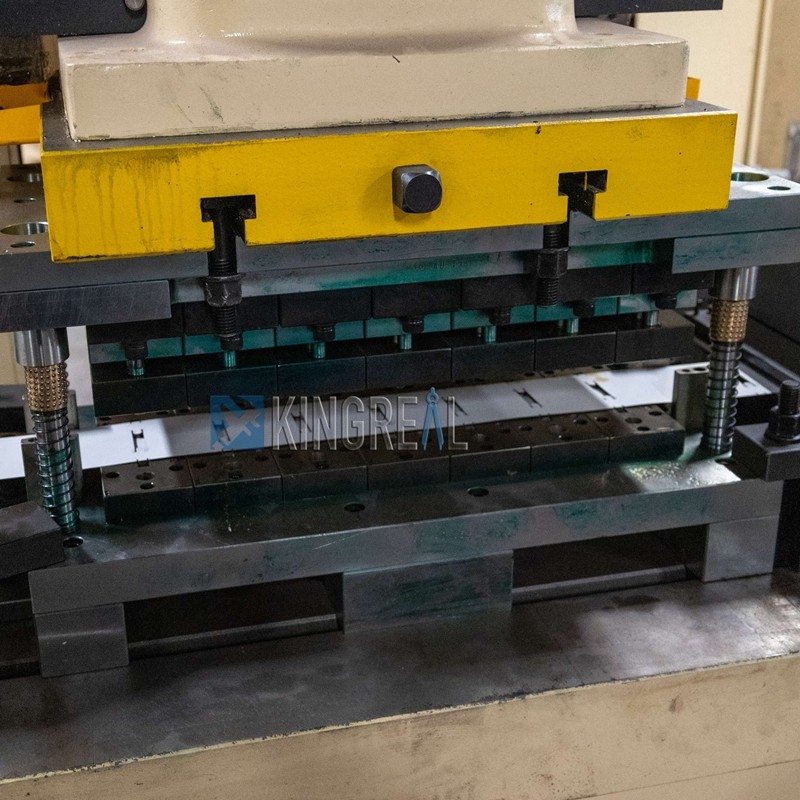
16-Ton Punching Press (standard grilyato ceiling machine): Utilizes a "single-hole cycle" mode. The material feeder advances the material by one pitch, and the punch descends once. This method offers a simple structure and easy maintenance, making it ideal for smaller production lines.
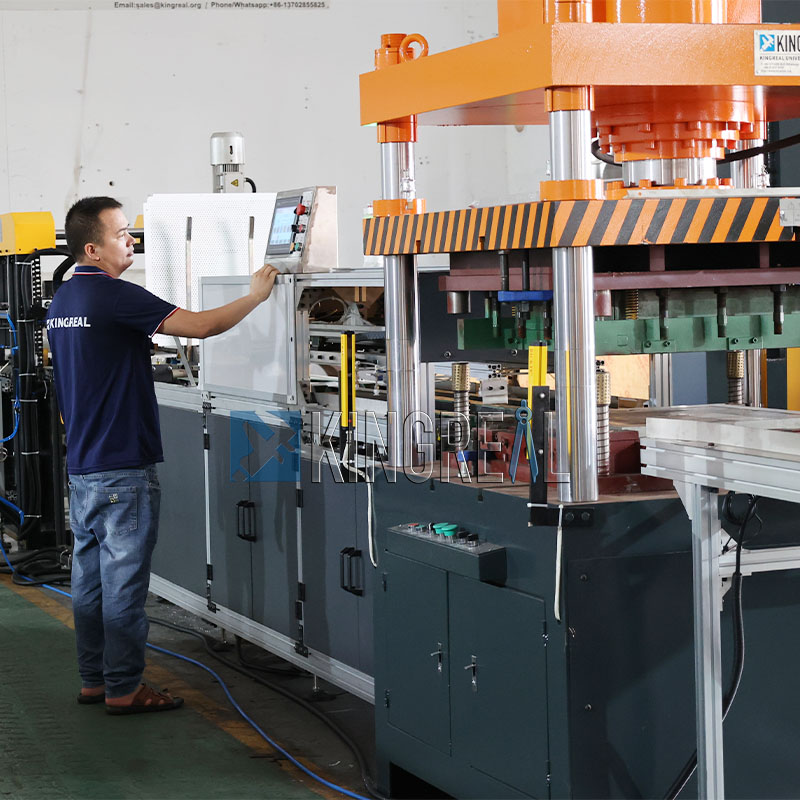
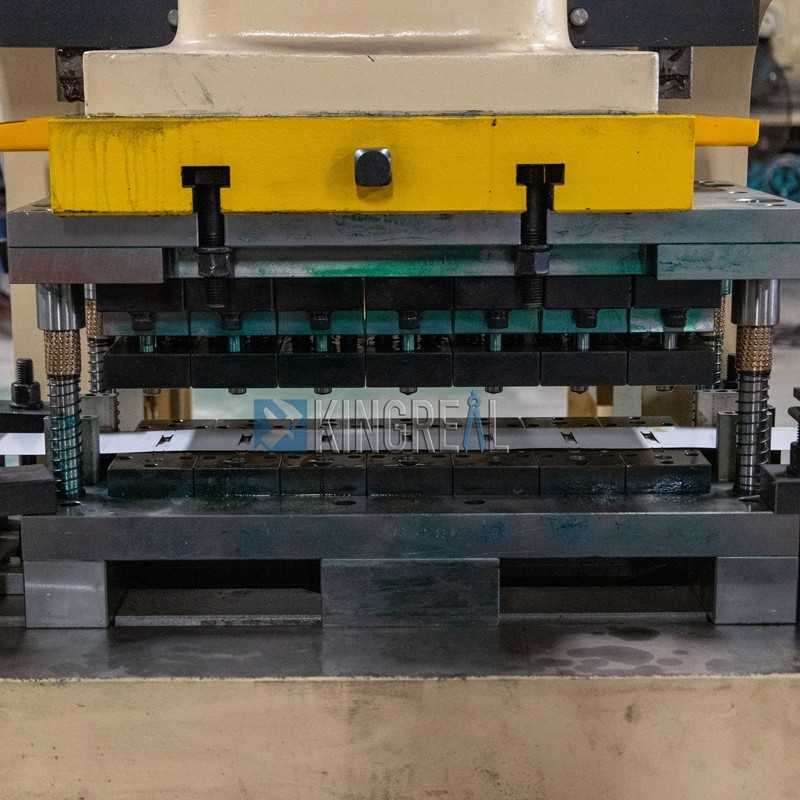
63-Ton Punching Press (high-end grilyato ceiling production line): Utilizes a "synchronous row punching" mode. Leveraging the higher tonnage, KINGREAL CEILING MACHINERY designed custom punching molds capable of punching an entire row of holes in a single stroke.
2. Precision Control: Eliminating Cumulative Error
The precision of the 16-ton punching configuration relies heavily on the stepping accuracy of the material feeder. Frequent start-stop cycles and resetting operations can cause the material to slip slightly during high-speed processing, leading to cumulative errors.
The 63-ton configuration punches an entire row of holes in a single stroke; the relative positioning of the holes is fixed by the die set, making it independent of the material feeding step. This ensures seamless alignment during assembly, significantly simplifying on-site installation.
3. Production Efficiency Gap
The 63-ton punching press significantly reduces the reciprocating frequency of the punch. At the same feeding speed, the output rate is approximately 30%–50% higher than that of the 16-ton configuration, making it the preferred choice for high-output factories.
16-ton Press:
63-ton Press:
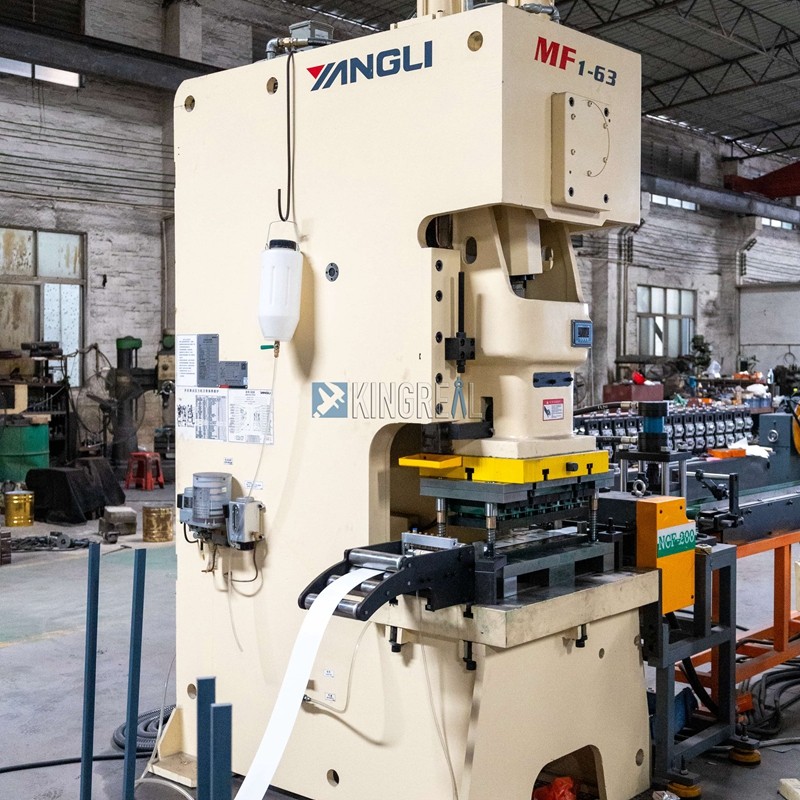
In-depth Technical Analysis: Presses for Grilyato Ceiling Machines
To better understand the differences between the 16-ton and 63-ton presses used in grilyato ceiling production lines, we must examine technical aspects such as mechanical rigidity, die lifespan, and material adaptability.
1. Mechanical Rigidity and Stress Distribution
When punching thicker or harder aluminum alloys or steel, the 16-ton press may experience slight elastic deformation of the machine body.
In contrast, the 63-ton press features a robust cast body or welded frame, offering superior longitudinal and lateral rigidity.
During the punching stroke, the high-tonnage equipment effectively absorbs impact energy and minimizes machine vibration.
For KINGREAL CEILING MACHINERY clients in Russia and Ukraine, this stability translates to reduced mechanical wear and sustained precision during long-term, high-load operation.
2. Tonnage Reserve Principle
In industrial stamping, it is generally recommended that the actual required punching force accounts for only 60%–70% of the press's nominal tonnage.
Using a 63-ton press for open cell ceiling punching provides a substantial "tonnage reserve."
This allows the punch to cut through the material more effortlessly and generate less heat, significantly extending the service life of expensive tungsten carbide or high-speed steel dies and reducing consumable replacement costs for the customer.
3. Adaptability to Different Materials
The material thickness for open cell ceilings typically ranges from 0.3mm to 0.4mm; however, requirements regarding material coatings and base material yield strength vary by country.
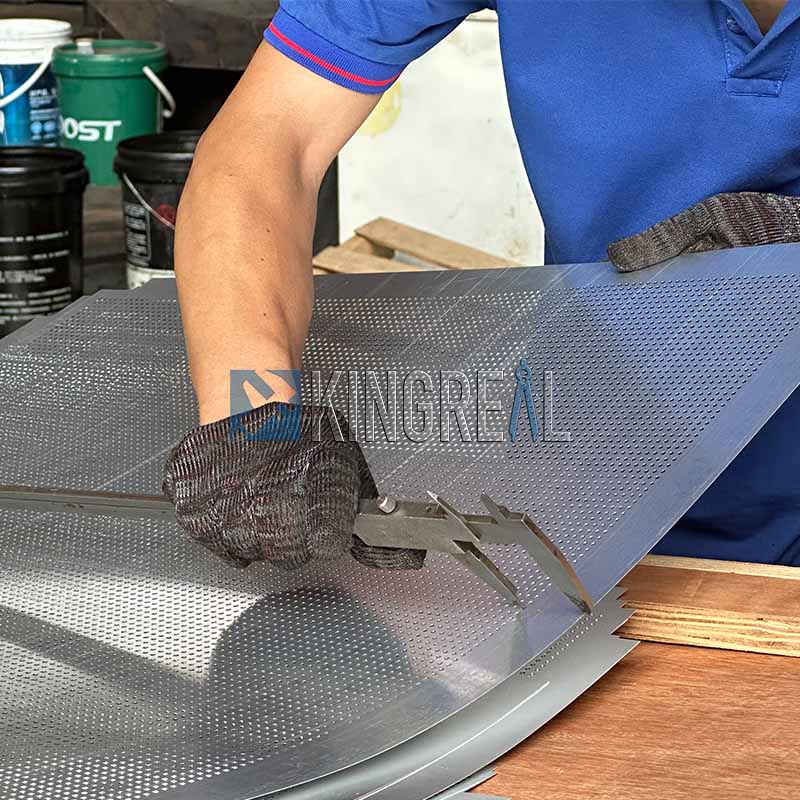
16-Ton Punching: Suitable for standard color-coated aluminum strips. When processing thicker aluminum or high-strength steel, burrs may appear at the punched edges.
63-Ton Punching: The powerful shearing force ensures clean, smooth punched edges regardless of material hardness, eliminating the need for secondary grinding and meeting the high FAT standards required for premium office buildings or airport projects.
How to Choose the Grilyato Ceiling Machine Solution?
When deciding between a 16-ton and a 63-ton punch press for your grilyato ceiling production line, evaluate the choice based on these three core dimensions:
1
Production Capacity Goals
If your project's annual demand is under 100,000 square meters, a standard machine equipped with a 16-ton punch press offers excellent cost-effectiveness and is sufficient for daily production.
For large-scale infrastructure supply projects, the high-speed stability of a 63-ton punch press is crucial for ensuring timely delivery.
2
Assembly Standards
For markets with strict assembly tolerance requirements—such as Europe or South Korea—the high consistency provided by a 63-ton punch press (utilizing a full-row punching configuration) is indispensable.
3
Budget and ROI
While the initial procurement cost for a grilyato ceiling machine with a 63-ton punch press is higher, the long-term ROI typically surpasses that of the 16-ton model after 18 months of operation, thanks to reduced downtime for maintenance, extended mold life, and higher output per unit of time.
KINGREAL CEILING MACHINERY: Customized Grilyato Ceiling Machine Solutions
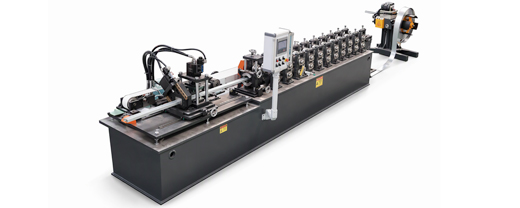
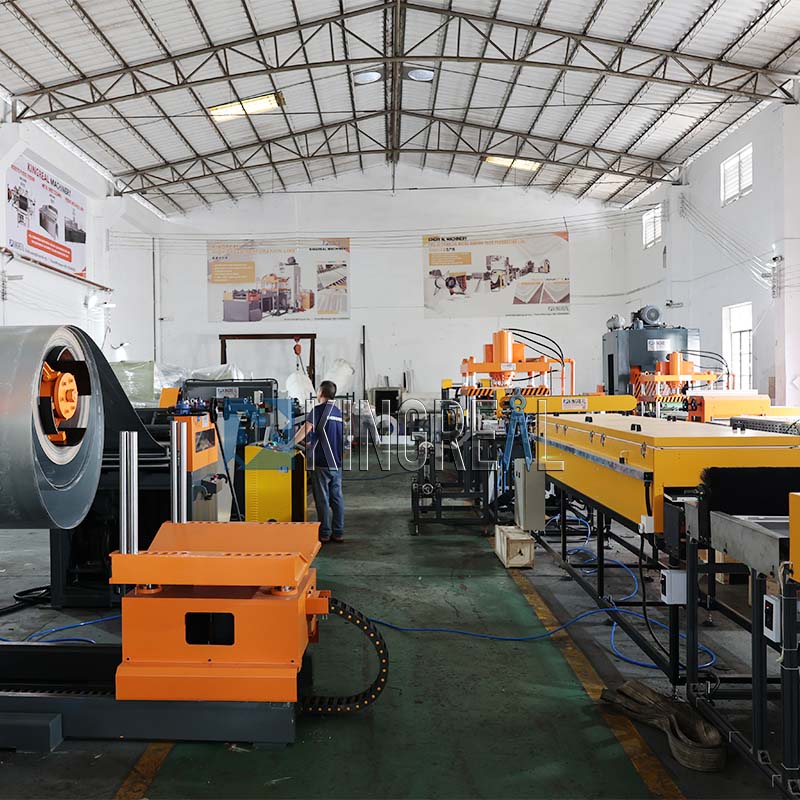
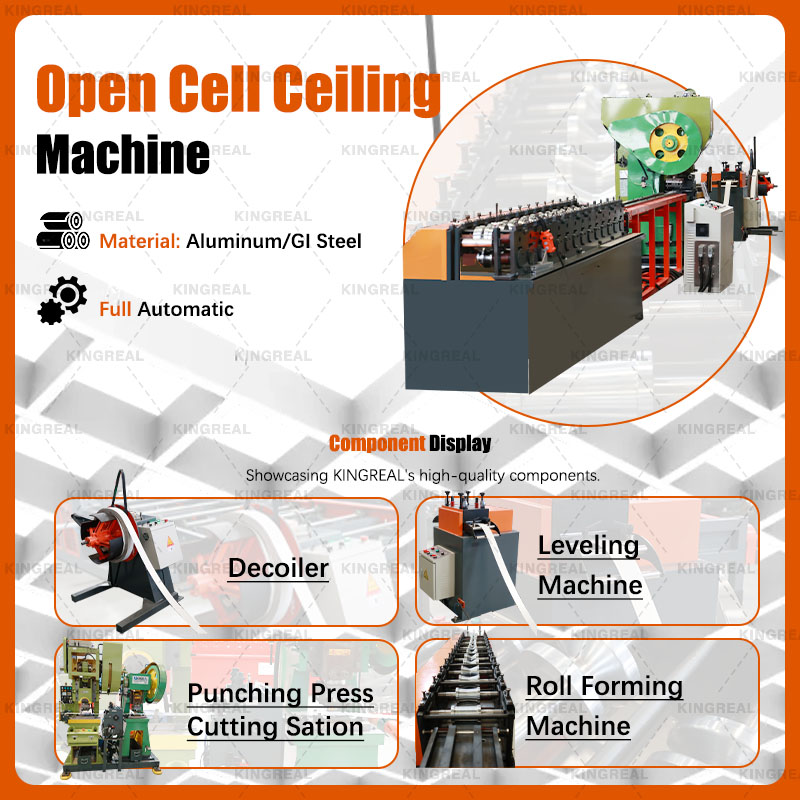
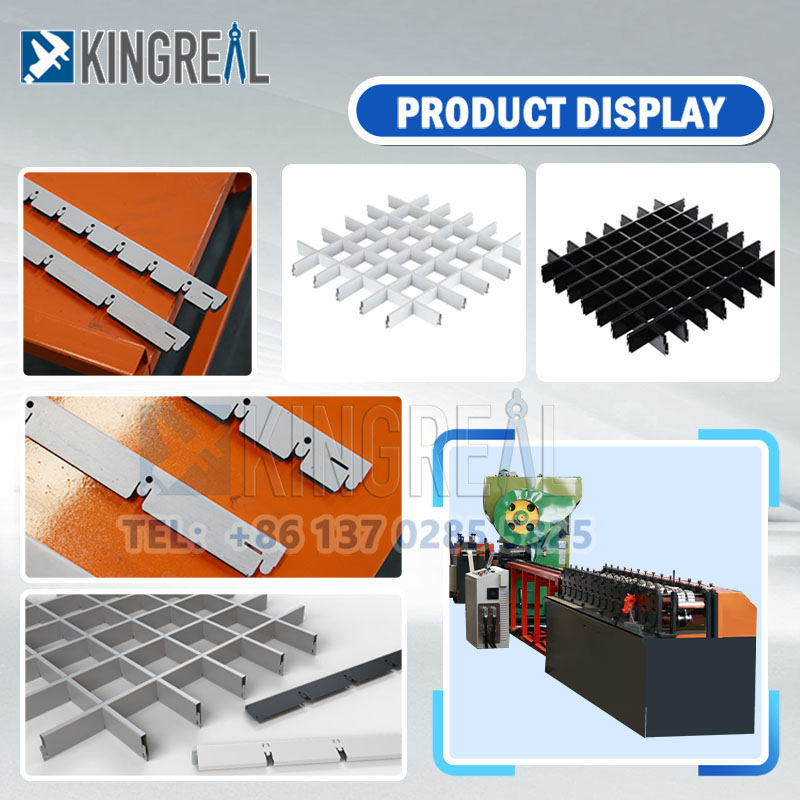
KINGREAL CEILING MACHINERY grilyato ceiling production lines feature a complete, closed-loop process, ranging from precision uncoiling, leveling, and servo-feeding to high-tonnage precision punching, synchronous cutting, and flawless forming.
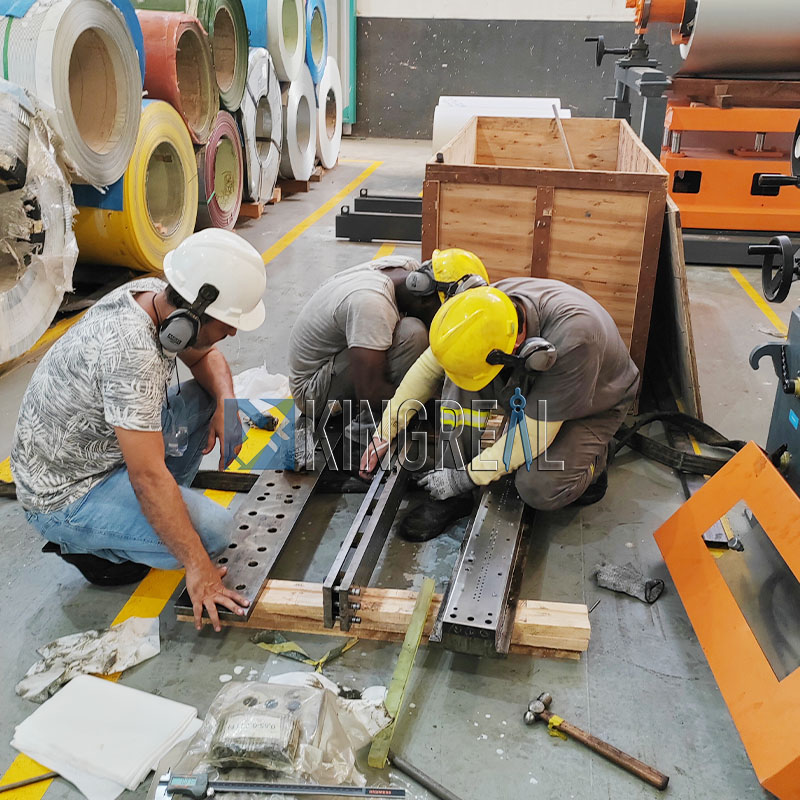
KINGREAL CEILING MACHINERY offers customized configurations tailored to clients in different regions: for instance, equipping machines with Siemens control systems to ensure electrical compliance; providing cold-resistant hydraulic systems and reinforced mechanical structures for clients in cold climates; and supplying grilyato ceiling machines with protective shields for clients with stringent production safety requirements.
KINGREAL CEILING MACHINERY continuously advances its technology regarding precision, efficiency, and operational safety, ensuring that every delivered grilyato ceiling production line serves as a profit center for the client's facility.
Whether you are looking for a standard grilyato ceiling machine offering exceptional value or a high-performance setup featuring a 63-ton punch press, KINGREAL CEILING MACHINERY can tailor a manufacturing solution specifically to your project requirements.
Would you like to receive detailed technical specifications or a personalized quote?
Please contact KINGREAL CEILING MACHINERY directly; our engineers are ready to provide you with one-on-one technical consultation.