

In the metal processing industry, metal sheet leveling machines are core equipment for solving various metal part deformation problems. They can precisely overcome common industry pain points such as metal sheet warping, surface unevenness, stress deformation, and corner bending.
After processes such as cutting, stamping, and rolling, metal sheets are prone to deformation. Without leveling, this directly leads to subsequent problems such as bending misalignment, welding misalignment, and poor assembly, significantly increasing the probability of product scrap and raising production costs. Sheet metal leveling machines, with their precise leveling technology, can effectively correct various metal deformation defects, release internal stress in the sheet metal, and ensure smooth progress of subsequent processing steps. Metal sheet leveling machines are highly adaptable and can perform leveling processing on the vast majority of metal materials and irregularly shaped metal work-pieces on the market.
This article will introduce the various materials and work-piece types that sheet metal leveling machines can handle, helping processing companies accurately match suitable metal sheet leveling machines and processing solutions.
Common Metal Processing Materials Compatible with Sheet Metal Leveling Machines
(1) Thin and Soft Materials such as Aluminum Alloys and Stainless Steel Sheets
Aluminum alloys and stainless steel sheets are the most widely used thin and light metal materials in sheet metal processing, home appliance manufacturing, and decoration engineering. These materials are thin, relatively soft, and have low yield strength, making them prone to deformation problems such as minor waviness and slight warping after processing. They are best suited for four-high leveling machines.
This four-high leveling machine uses a four-layer roller structure with working rollers and support rollers. It utilizes the Bauschinger effect specific to metal materials to complete the leveling operation. The rollers repeatedly cause the sheet metal to bend slightly, effectively reducing the yield strength of the metal material and weakening its resistance to plastic deformation, allowing thin and light sheets to be easily corrected and shaped.
The four-high leveling machine offers extremely high leveling precision for aluminum alloys and ordinary stainless steel sheets, completely eliminating minor surface deformations. It is perfectly suited for processing thin and light work-pieces such as kitchen and bathroom decorative panels, home appliance casings, and precision decorative aluminum sheets, ensuring a smooth, clean surface without indentations or deformation.
(2) High-Strength Steel Plates, Cold-Rolled Steel, and Other High-Hardness Thick Materials
High-strength steel plates and cold-rolled steel are metal materials with high hardness and yield strength. They are also thicker and more rigid, making them difficult for conventional sheet metal leveling machines to achieve precise leveling. This often results in incomplete leveling and secondary spring-back. These materials are specifically suited for six-high leveling machines.
The six-high leveling machine adds a row of intermediate rollers to both the top and bottom of the traditional upper and lower work rollers and support rollers, forming a triple-roll, six-roll precision roller structure. This upgraded roller structure significantly improves the six-high leveling machine's straightening pressure and structural stability, resisting the spring-back stress of high-hardness metal plates. It is particularly effective for correcting deformation in thick plates, high-strength steel plates, and cold-rolled steel plates. Compared to ordinary metal sheet leveling machines, this six-high leveling machine has stronger leveling capabilities and greater versatility, and can reliably handle various high-hardness thick metal plates used in engineering machinery and steel structure processing.
(3) Carbon Steel, Copper, Brass, and Various Metal Alloys
Carbon steel, pure copper, brass, and various composite metal alloys possess moderate material properties and are widely applicable, making them suitable for conventional roller levelers.
Roller levelers are highly adaptable, capable of processing metal sheets of various sizes and standard thicknesses, covering most common metal processing scenarios, and are commonly used equipment in small and medium-sized processing enterprises.
However, this particular roller leveler is a standard general-purpose device with slightly weaker precision control and stress adjustment capabilities, making it unsuitable for leveling ultra-high-strength metal materials. Under standard processing conditions, this roller leveler achieves optimal leveling results for carbon steel, copper, and brass alloy sheets with a thickness not exceeding 0.5 inches, effectively correcting normal sheet deformation and meeting the processing precision requirements of ordinary mechanical parts and hardware components, offering excellent cost-effectiveness.
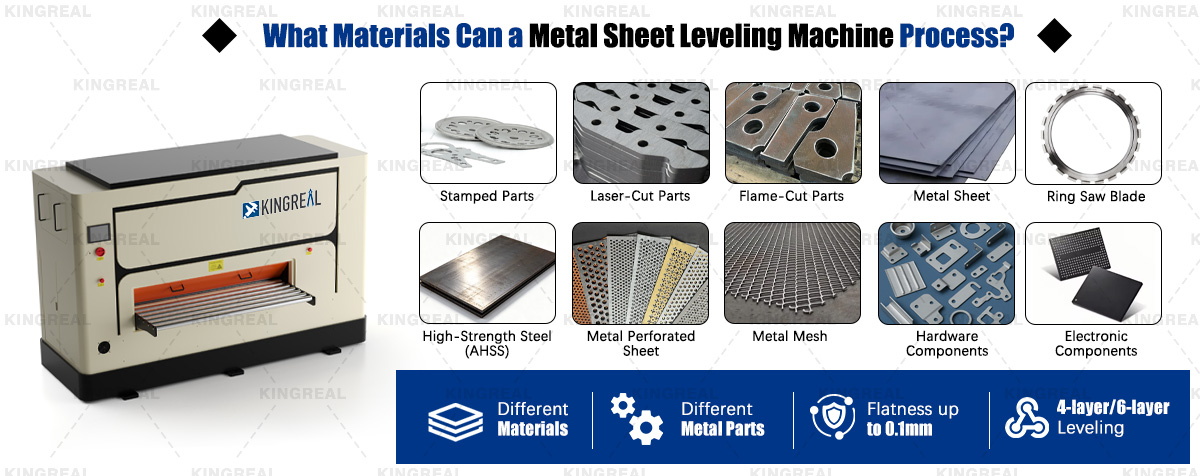
Various Metal Processing Parts for Sheet Metal Leveling Machine
(1) Punched & Laser Cut Parts
Punched and laser-cut parts are core components in sheet metal processing and precision hardware production. After laser cutting and mechanical punching, sheet metal develops significant residual internal stress, easily leading to problems such as edge warping, micro-deformation of the sheet surface, and wavy edges. This directly affects the accuracy of subsequent bending, welding, and assembly processes. Metal sheet leveling machines can specifically handle the leveling of these parts. Through multiple flexible and repeated leveling processes, residual stress within the sheet metal is thoroughly released, correcting various deformation defects in one go and preventing secondary deformation during subsequent processing.
(2) Flame Cut Parts & Plates
Thick metal plates processed by flame cutting generally exhibit large deformation ranges, uneven surface hardness, and rust or dirt on the surface, making them challenging to level. KINGREAL CEILING MACHINERY sheet metal leveling machines are equipped with a high-pressure leveling structure, providing strong load-bearing capacity and sufficient straightening pressure, suitable for leveling metal plates up to 60 mm thick. Metal sheet leveling machines can easily correct the bending and twisting deformation of large, thick plates, unaffected by rust or dirt on the plate surface. They can complete the leveling process of rough, thick plates without damaging the substrate, ultimately producing high-quality plates with low stress and high flatness, suitable for the thick plate processing needs of the steel structure, heavy machinery, and shipbuilding industries.
(3) Perforated Plates & Mesh
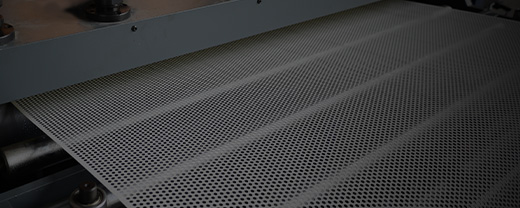
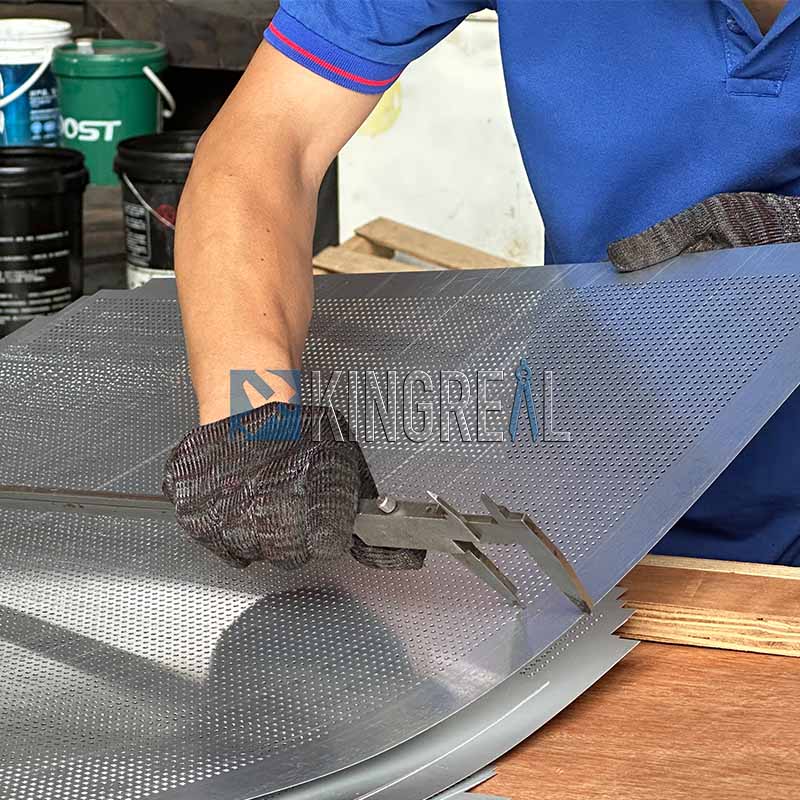
Perforated plates and mesh are porous metal work-pieces with a special structure, making them prone to uneven stress. After processing, problems such as unevenness on the plate surface, hole misalignment, and localized collapse can easily occur. Ordinary sheet metal leveling machine can easily cause hole deformation and work-piece scrap. Metal sheet leveling machines, however, are equipped with multi-point balanced leveling technology. The roller group experiences uniform force and pressure distribution, enabling all-round flexible leveling of porous plates. This not only thoroughly corrects unevenness and deformation of the plate surface and restores the flatness of the plate, but also precisely protects the regularity of each hole, avoiding hole deformation and diameter deviation. This perfectly meets the processing needs of filter screens, decorative perforated plates, equipment heat sinks, and other work-pieces.
(4) Precision Workpieces for Ring Saw Blades
Ring saw blades are high-precision ring-shaped metal parts with extremely high requirements for flatness and tolerance accuracy. After processing, they are prone to minor deformations such as ring twisting and planar offset, which are difficult to correct using ordinary equipment. For these irregularly shaped precision work-pieces, KINGREAL CEILING MACHINERY sheet metal leveling machines support customized leveling strokes and processing parameters. This allows for precise correction of ring saw blade twisting and planar deviations, strict control of work-piece processing tolerances, meeting the high-precision production standards of precision mechanical parts, and ensuring the stability of subsequent assembly and use of the saw blade.
Advantages of KINGREAL CEILING MACHINERY Metal Sheet Leveling Machine
Customized Design
KINGREAL CEILING MACHINERY offer various solutions based on the actual project needs of our clients, including thin plate leveling machines, heavy duty leveling machines, high-speed leveling machines, and high precision leveling machines.
Improved Production Line Processing Stability
Stress-free, flat plates processed by metal sheet leveling machines can be smoothly integrated with downstream equipment such as bending machines, welding fixtures, and cutting tables. This effectively avoids equipment jamming and work-piece jamming, reduces equipment wear, simplifies the overall processing flow, and improves the processing stability of the entire production line.
KINGREAL CEILING MACHINERY, a professional manufacturer and supplier of sheet metal leveling machines, supports customized designs and can tailor-make metal sheet leveling machines for special materials, irregularly shaped work-pieces, and special production capacity requirements.
KINGREAL CEILING MACHINERY also provides one-stop equipment support services. Whether you need leveling standard metal sheets or irregularly shaped precision work-pieces, contact KINGREAL CEILING MACHINERY for a customized sheet metal leveling machine solution and accurate quote.